






What Are ITSM Tools & Why Do They Matter to Your Business
ITSM tools streamline service delivery across departments, from IT to HR. Learn how core processes like Incident and SLA Management enhance efficiency and…

Jump to section
Introduction
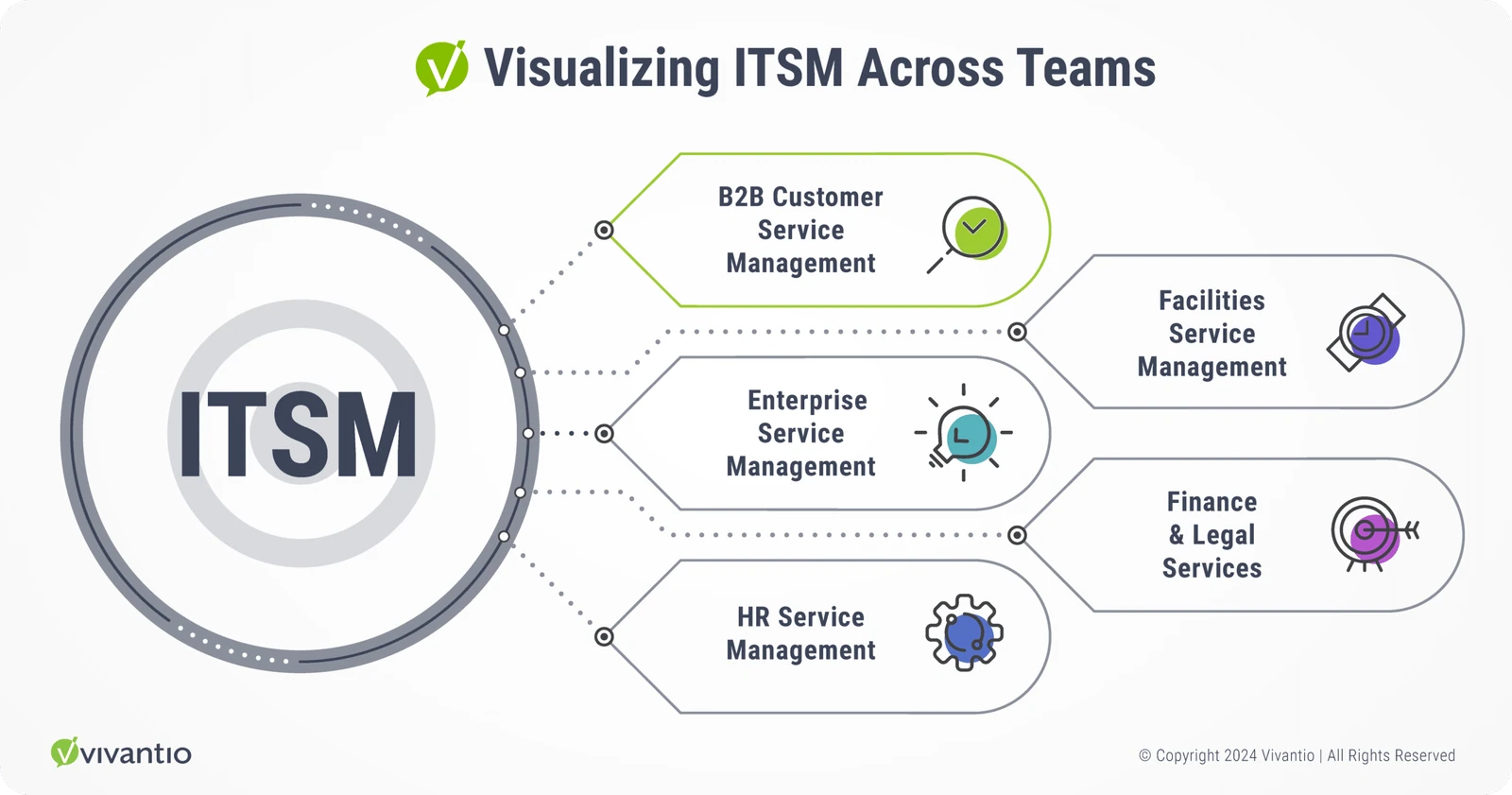
IT Service Management (ITSM) tools offer structure for delivering efficient, high-quality service across an organization. Once considered solely IT-driven, these tools now support diverse teams—HR, Finance, Customer Service—ensuring consistent service for internal and external users alike. Here’s a look at the key processes ITSM tools support, what makes them effective, and how they can flexibly meet your unique needs.
What Makes an ITSM Tool Effective?
An effective ITSM tool aligns with your organization’s specific needs. The best platforms provide customizable workflows, especially useful for Managed Service Providers (MSPs) and Internet Service Providers (ISPs) who often balance various client requirements. With today’s ITSM technology, your team can benefit from adaptive tools—think automation to reduce incident resolution times and customizable dashboards that track what matters most. According to research, automation in ITSM reduces incident times by up to 50%, enabling quicker resolutions and happier end-users. (SDI) Service Desk Institute
Supporting Key ITSM Processes
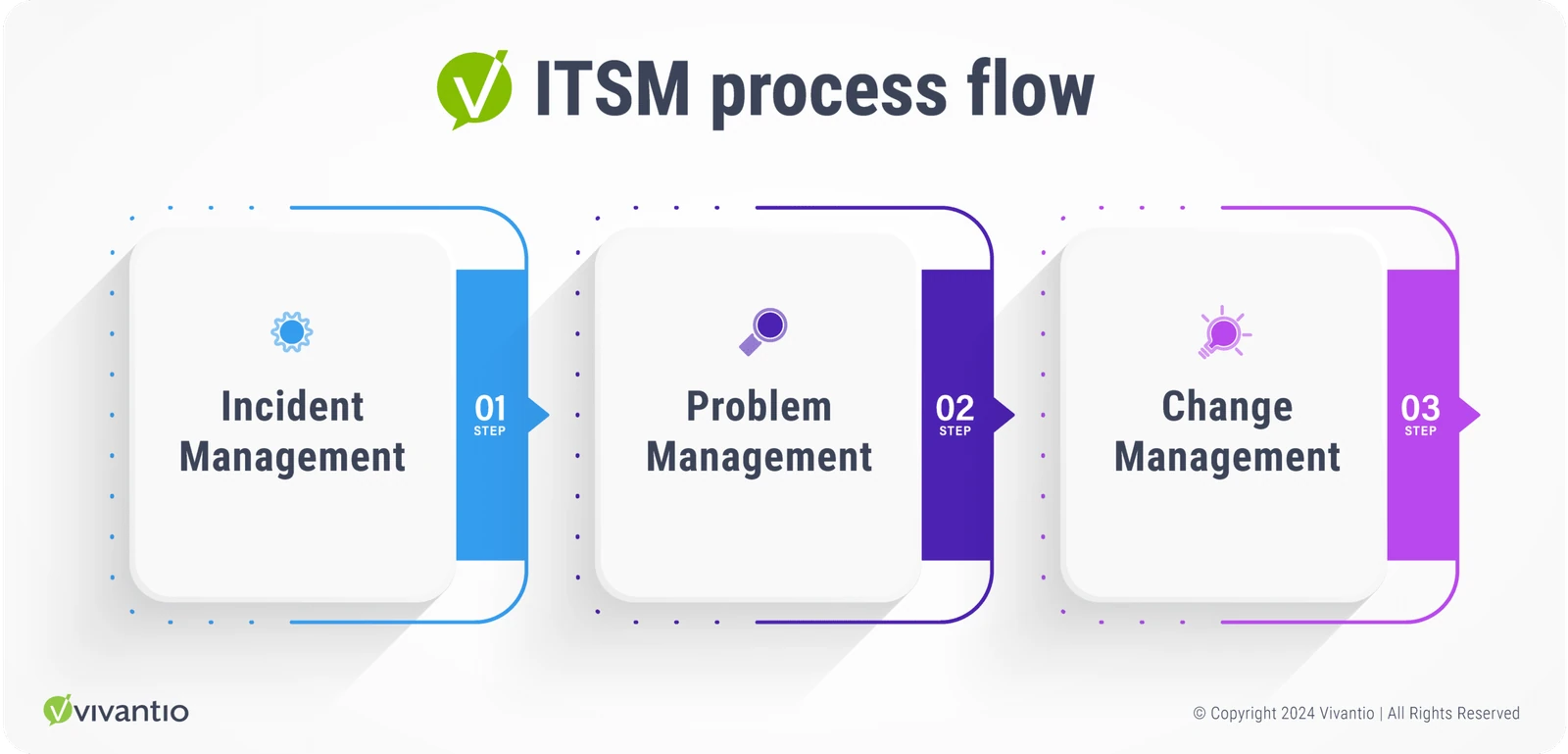
A strong ITSM tool supports several core processes that help streamline and improve service delivery. Here’s a look at some of the most critical processes commonly found within an ITSM platform and how they contribute to an efficient service environment:
- Incident Management: Incidents are unexpected issues that require prompt resolution, like password resets or email outages. Incident management focuses on restoring services as quickly as possible. Modern ITSM tools may leverage AI to triage incidents, prioritize them based on urgency, and direct them to the right team members, minimizing response times.
- Problem Management: When multiple incidents arise from a single root cause, problem management works to identify, categorize, and resolve that underlying issue. By storing problem details and workarounds, the ITSM system allows teams to prevent future incidents or resolve them faster.
- Change Management: Managing changes to services, software, or systems requires careful planning and risk assessment. Change management workflows in ITSM tools help ensure that changes are approved, communicated, and monitored, with rollback plans in place if needed. With dashboards that offer real-time insights into active changes, teams can manage these shifts without disrupting critical business functions.
- Configuration Management: Configuration management focuses on maintaining a database (CMDB) that tracks IT assets, configurations, and dependencies. With a well-maintained CMDB, teams have a visual overview of asset relationships, which is essential for change management and troubleshooting.
- Service Level Management: This process ensures teams meet customer expectations through Service Level Agreements (SLAs), which prioritize incidents and requests based on urgency. ITSM tools provide SLA management to help teams prioritize effectively and track resolution times, aligning service delivery with business goals.
- Knowledge Management: An often-underestimated asset, a knowledge base reduces repetitive work by providing documented solutions for frequent issues. ITSM tools with strong knowledge management features help teams quickly access information and maintain consistency in responses, improving operational efficiency and customer satisfaction.
Additional ITSM Processes for Comprehensive Service Management
Beyond the core processes, advanced ITSM tools support other workflows that enhance a service organization’s ability to operate smoothly:
- Release Management: Before a change is fully implemented, release management ensures it is tested and verified, minimizing risk to the business. ITSM tools often include release management features that allow for scheduled deployments and user notifications.
- Availability Management: Ensuring system uptime is crucial. Availability management in ITSM tools focuses on minimizing downtime and scheduling updates during off-hours to reduce disruptions. By using CMDB data, IT teams can predict and prevent potential issues that might impact availability.
- Capacity Management: This process ensures the IT infrastructure has the necessary resources—such as bandwidth and storage—to meet current and future demands. With capacity management, ITSM tools help teams anticipate growth and prepare for resource-intensive periods.
- Project Management: Project management tools integrated within ITSM streamline operations across multiple teams, providing structure and ensuring that projects are completed on time.
- Financial Management: Managing the finances of IT operations becomes easier with ITSM tools that track costs, optimize spending, and ensure the IT department’s financial health aligns with organizational goals.
Case Study: Elevating Service with Vivantio’s ITSM at NG Bailey
NG Bailey, a prominent UK engineering firm, transformed their service management using Vivantio. With a focus on optimizing self-service and improving data gathering at the start of requests, they experienced significantly faster response times and smoother service experiences. NG Bailey’s story highlights how flexible, user-friendly ITSM can streamline processes and improve service quality across an entire organization.
Choosing the Right ITSM Tool to Empower Your Teams
An effective ITSM tool does more than enable processes; it empowers teams by offering intuitive configurations that allow for streamlined operations. A suitable tool emphasizes configuration over rigid customization, letting your team align with best practices without compromising flexibility. With the right platform, teams can quickly learn, adapt, and focus on delivering high-quality service.

Scalability and Flexibility
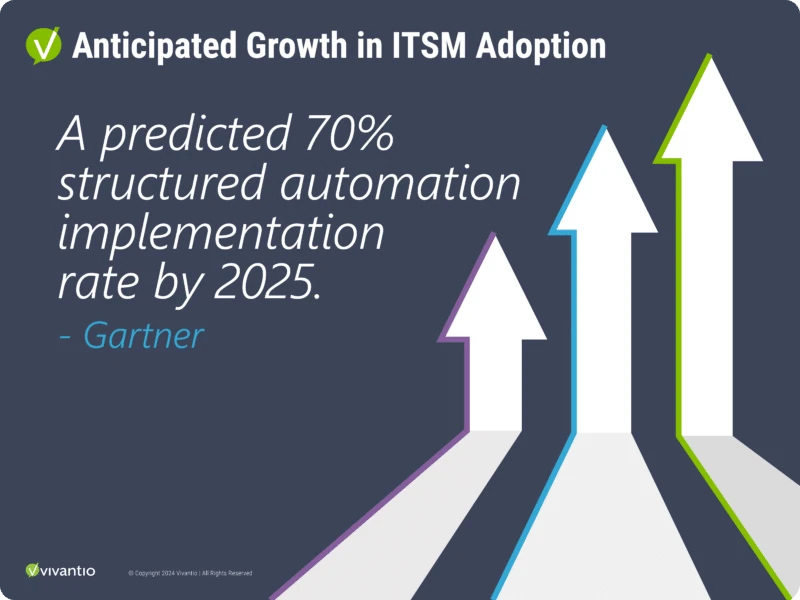
When choosing an ITSM tool, scalability is key. Gartner predicts that by 2025, structured automation will reach 70% of organizations, up from just 20% in 2021. (SDI) Service Desk Institute
The right ITSM solution will let you grow, integrate, and adapt as new needs arise. MSPs, in particular, can benefit from modular ITSM systems that accommodate expansion and allow configuration tailored to each client.
Optimizing Operations and Enhancing the User Experience
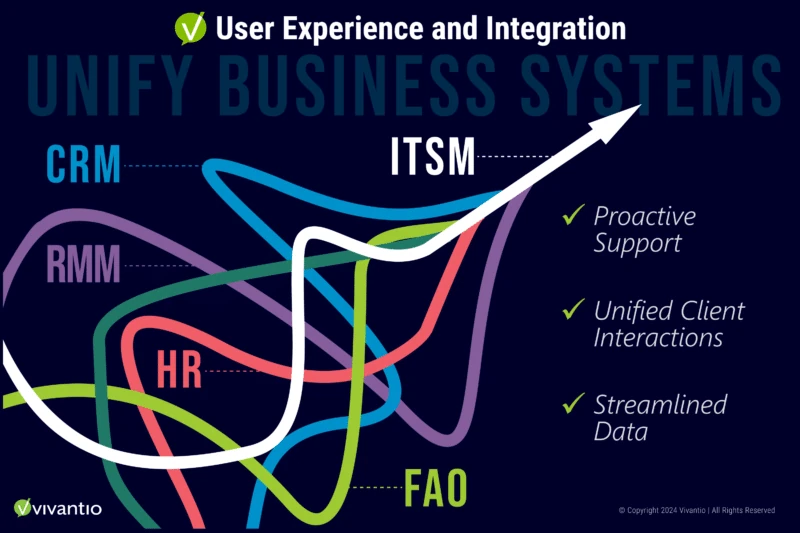
Good ITSM should improve both productivity and the user experience. For MSPs and ISPs, integrating ITSM tools with other business systems (like CRM or ERP) enables unified client interactions, proactive support, and quicker solutions. A seamless, user-friendly platform reduces the time teams spend learning software, empowering them to focus on their work.
Unlocking Efficiency and Exceptional Service Delivery
A well-implemented ITSM tool elevates service delivery across departments. The right platform lets your team work smarter and faster, meeting client expectations with ease and confidence. Vivantio’s adaptable solution is built to support evolving business demands while helping MSPs and ISPs stay ahead in the competitive landscape. Discover how Vivantio can support your goals—contact us for more information or to schedule a free demo.
Read more
Browse all resources

Ready to see it?
See Vivantio in action
Step your team up to real service management, without the leap to enterprise. Get a walkthrough tailored to your workflows.